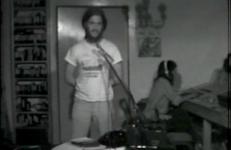



A portrait of a studio photographer, Her + Him VAN LEO also examines the photography of the 1940s and 50s from a critical perspective rather than a nostalgic one. This documentary utilizes traditional portrait photography and video in a dialogue between two media: crafted black and white print, and the electronically colored and manipulated screen. This dialog comments on the transformations in art practices and terminologies, and evokes some of the social/urban/political transformations that took place in Egypt over 50 years of its recent history.
Film or Videomaking
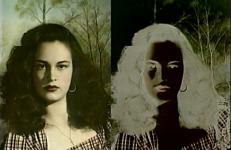
Hitchcock Trilogy, 1987
“On the surface, Rea Tajiri’s work reads like the standard deconstruction of appropriated popular media via text to which we have grown accustomed in the ’80s. But this is a work of remarkable evocation and resonance that counterpoints and complements the scores of Hitchcock films with ‘meta-narrative’ possibilities. These possibilities occur by doubling the inherent distance from the appropriated subject, standing twice removed in the realm of parallels rather than parodies.
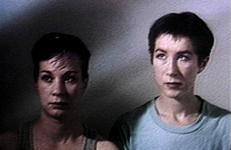
Homage by Assassination, 1992
A Palestinian filmmaker is writing a script in his New York apartment during the first Gulf war. As much as he tries to shut himself off from the exterior world, images of past wars in the Middle East come back to haunt him.
This title is available on Radical Closure and for single screenings upon request.
Hush, Hush, Sweet Harlot, 1999
The plot of this colorful and episodic video drama concerns the gifted protégé of a war torn world who is granted a glimpse into the future by reading the imprinted impressions of human buttocks. At least that is what I think it is about. There are many loud sequences of inner and outer turmoil with pretty cast members being faithful to the weaving plot line as it spins its convoluted tale of exposed rear ends and dangling subplots. The pace is fast and painless as a parade of young people bring to life a story ripped from the pages of our most lurid, celebrity tabloids.
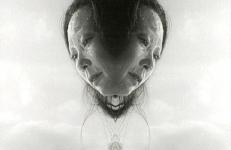
Hyperthermia, 2019
In Hyperthermia the cinematic body becomes overwhelmed by the luminous projection of outside political factors, causing the internal temperature of the celluloid to rise to dangerous levels.
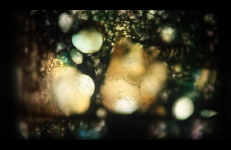
Made collaboratively with the filmmaker's mom Deborah, I Can Hear My Mother’s Voice documents her process of learning how to use the filmmaker's video camera. As Deborah watches the footage she has recorded, she reacts to and describes the footage she sees––showing what and how she sees––while opening up a space between sense, memory, speculation, and grief.
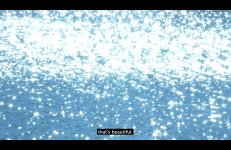
The film is open captioned and audio described in English. Still image description: Light sparkles on blue water. A caption at the bottom of the image reads: "that's beautiful."
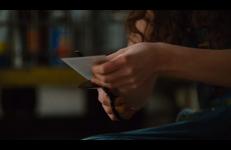
An experimental portrait of a lighting stand-in and body double for a famous Hollywood actress, and a glimpse at the behind-the-scenes of cinema production
Music by The Velvet Underground.
A myth illustrated on the stones of a waterfall, the reconstruction of a great communal hut, the attempt to recover objects kept for years in a museum in Manaus. In IAUARETÊ, Waterfall of the Jaguars the Tariano Indians, of the North-western Amazon, after decades of missionary catechism, decide to make a cultural record for future generations.
Direction: Vincent Carelli
Photography: Vincent Carelli and Altair Paixão
Editing: Joana Collier
Production: IPHAN / Vídeo nas Aldeias
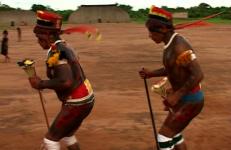
A myth illustrated on the stones of a waterfall, the reconstruction of a great communal hut, the attempt to recover objects kept for years in a museum in Manaus. In IAUARETÊ, Waterfall of the Jaguars the Tariano Indians, of the North-western Amazon, after decades of missionary catechism, decide to make a cultural record for future generations.
Direction: Vincent Carelli
Photography: Vincent Carelli and Altair Paixão
Editing: Joana Collier
Production: IPHAN / Vídeo nas Aldeias
It's the time of celebration and merriment in the Alto Xingu. The dry season is coming to an end. The smell of the damp earth is mixed with the sweet perfume of pequi. But it has not always been like that: if it had not been for a death, the pequi would possibly not exist. Linking the past to the present, Kuikuro filmmakers tell a tale of dangers and pleasures, of sex and betrayal, where men and women, hummingbirds and alligators build a shared world.
Direction: Takumã and Maricá Kuikuro
Photography: Takumã, Mariká, Amuneri, Asusu, Jairão and Maluki
Imitations of Life, 2003
"It may indeed be questioned whether we have any memories at all from our childhood: memories relating to our childhood may be all that we possess. Our childhood memories show us our earliest years not as they were, but as they appeared at the later periods when the memories were aroused. In these periods of arousal, the childhood memories did not, as people are accustomed to say, emerge; they were formed at that time. And a number of motives, with no concern for historical accuracy, had a part in forming them, as well as in the selection of the memories themselves."
Materials: 3378 hi-con, Laser engraver, Exacto knife
Shot at the Film Farm in Mt.Forest, this comedy is a quest about performance, educational voiceover, analogue filmmaking, ASCII, language, ethics of ethnography and narrative storytelling under a metaphor of instructions to farm land.
Text by Barbara Kirshenblatt-Gimblett and Wikihow/shoot-film.
Interface, 1995
"Harun Farocki was commissioned by the Lille Museum of Modern Art to produce a video about his work. His creation was an installation for two screens that was presented within the scope of the 1995 exhibition The World of Photography. The film Interface (Schnittstelle) developed out of that installation. Reflecting on Farocki's own documentary work, it examines the question of what it means to work with existing images rather than producing one's own, new images.
This is a short direct to camera piece, originally commissioned for a screening of My Summer with Raúl at Antimatter (BC). In the first half I talk about Raúl, and it works well as a way in: you get to hear a bit about some of the hows and whys behind that film, just as a taster.
"This film is at once a self-portrait and an homage to Jean-Marie Straub, Farocki's role model and former teacher. Farocki's admiration for Straub was so great that he said of Between Two Wars, Perhaps I only made this film to earn Straub's recognition." In this observation-driven film, Farocki documents the fulfillment of his wish. The film shows Farocki, under Straub's direction, rehearsing for his role as Delamarche in the film Klassenverhältnisse (1983). Anyone who has seen Farocki's documentary of the shoot will never forget these short scenes.
David Cort of the Videofreex travels to Jerusalem. This tape contains raw footage of him as he is taken on a tour through a poor neighborhood by a group of young men. There is talk of the Israeli Black Panther Party, and of drug dealers and poverty. Somebody says the tape is being made for the Jewish Museum in NYC. The Israeli guide talks about the movement, and says the bourgeois and the poor can meet through parties and drugs. They visit a woman and her children who are living in poverty, and interview her about the needs of her family.
![Jerusalem Tapes: [Israeli] Black Panther on the Street](/sites/default/files/styles/215x140/public/images/jerusalemt.jpg?itok=_EmJohyE "Videofreex, Jerusalem Tapes: [Israeli] Black Panther on the Street")
During Videofreex member David Cort's travels to Jerusalem, a scene was shot in a hospital where a female patient is having electrodes attached to her body. The cameraman gets on the cot and has the electrodes attached to him as they talk about making a brain feedback machine for use at home. The next scene records the cameraman walking the streets of Jerusalem. People passing by interact with the camera.
Jewel of Jeopardy, 2010
Linda Martinez stars in this sequel to the horror series, which relishes in colorful detail the misadventures of Sherry Frankenstein. Made with my students at the San Francisco Art Institute, the viewer is plunged into a world of young and old as they tackle the monsters within and without. Chock full of entergetic scenes filled with all the opulence that only $600 could purchase, this epic of good gone bad will stun you with its massive verbosity and visual voracity. The plot deals with Ms. Frankenstein's mission to save the body and souls of strumpets in heat.
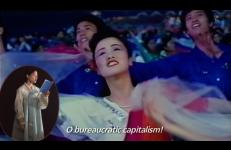
The Juche Idea, 2008
In the late 1960s Kim Jong Il guaranteed his succession as the Dear Leader of North Korea by adapting his father's Juche (pronounced choo-CHAY) philosophy to propaganda, film and art. Translated as self-reliance, Juche is a hybrid of Confucian and authoritarian Stalinist Pseudo-socialism. The film is about a South Korean video artist who comes to a North Korean art residency to help bring Juche cinema into the 21st Century.
Miranda July (b.1974) makes performances, movies, and recordings—often in combination. Her videos (The Amateurist, Nest of Tens, Getting Stronger Every Day) present complicated parallel narratives with characters who experience loneliness, exploitation, unexpected phobias, and often inexplicable relationships. July has also recorded several performance albums released by Kill Rock Stars and K Records. In 1995 she founded Joanie 4 Jackie, an on-going movie distribution network for independent women movie makers.
The Kiss, 1999
Made with Ian Bourn.
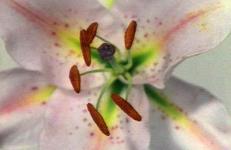
A depiction of the forced development of a hothouse flower. Organic growth is progressively overtaken by a more sinister mechanical process.
"The makers manage very convincingly to wrong-foot the viewer in just five minutes in this minimalist, lyrical film about a blossoming flower."
—International Film Festival Rotterdam (2000)
"A film of a disarming seeming simplicity which enigmatically prompts reflections on its meaning and its use of media."
For Shigeko Kubota the video image-making process is a cultural and personal experience. She has explored cross-cultural relationships in her video diaries, transient images captured by portable equipment while traveling—Kubota’s “comparative videology.” She has also combined fleeting video images with the “objecthood” of sculptural form in her series of video sculptures inspired by Duchamp.
Lanesville TV Overview I, 1972
"Between March 1972 and February 1977, the Videofreex aired 258 television broadcasts from a home-built studio and jerry-rigged transmitter in an old boarding house they rented in the tiny Catskill Mountain hamlet of Lanesville. It was a revolutionary act in defiance of FCC regulations — the first unlicensed TV station in America."
Although this episode promises, at first, to be a typical program of Lanesville Television—presenting two videos of previously shot footage of a truck wreck and a recent opening of a Buddhist Temple in South Cairo, NY—an unplanned event, arising mid-recording, becomes the catalyst for a high-energy, live-reportage segment.