


Do Not Circulate, an experimental short film, attempts a structuralist and materialist approach to unraveling the entrails of a collective media memory. Paced by an essay as a relentless voiceover, the film rips footage that challenges the materiality, ownership and legal boundaries of documentation.
Documentary

The Earth Is Young, 2009
The Earth Is Young takes as its starting point a series of interviews conducted with Young Earth Creationists, who find evidence of a six-day, six-thousand-year old creation in their reading of the fossil and geological record. The film frames these encounters with depictions of the slow and patient work of young paleontologists, and the strange, shimmering life in a drop of pond water, both of which point toward a world far older and more complex, if no less fantastic.
The Eddies, 2018
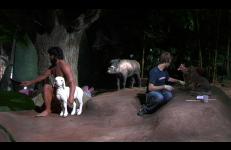
From below ground, a man named Eddie describes flood lines, levees and trivial histories of the crumbling infrastructure of Memphis, TN. In this same city, the filmmaker, a recent transsexual transplant, watches military propaganda and contemplates masculine connectivity as he attempts to integrate into the American South. He posts a Craigslist ad asking men to masturbate on-camera with their firearms. He receives a single response from a man whose name is also Eddie.
Eileen, 2000
This video is an unabashed fan letter to poet Eileen Myles. As in Laurie, my desire was to romanticize the poet, but not through her writing so much as through her reputation as the natural born child of the New York School and the Beats. I shot the movie as I imagined Robert Frank and Alfred Leslie shooting Pull My Daisy, a film that left an impression on me chiefly of the struggle between form and formlessness, plan and improvisation, sketch and story.
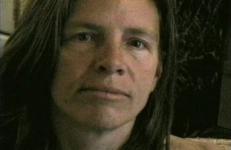
In this interview, African American filmmaker and DJ Ephraim Asili (b. 1979) discusses his upbringing, education, and creative process. Born and raised around the city limit of Philadelphia, Asili’s childhood and adolescence were imbued with hip hop music, Hollywood movies and television.

Exit Interview, 2014
Exit Interview is a tragi-comedy about obsolescence. A shrinking community’s resident documentary filmmaker is being fired.
In order of appearance: James Carter, Donigan Cumming, Colin Kane, Raymond Beaudoin, James Weber, Pierre Lamarche, Gerald Harvey, Rawson Hill
Fifeville, 2005
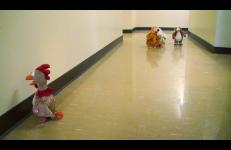
Fifeville is a film about a neighborhood in Charlottesville, Virginia. It focuses on the details, gestures, and material life of the citizens of Fifeville as they communicate their understandings of the neighborhood’s changing landscape. Although Fifeville is set in Charlottesville, it could be Any Black Community Experiencing Gentrification, USA, 21st Century.
Co-director: Corey D.B. Walker. Crew: bh103a.
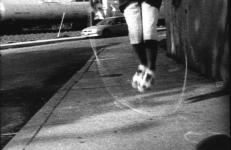
Reverend Howard Finster was a preacher-turned-folk artist. He created Paradise Gardens Park & Museum, a product of all his murals, drawings, sculptures, and mosaics—and Summerville, Georgia’s largest tourist attraction. He began Paradise Gardens around 1961; in 1976 he responded to a vision to paint sacred art. As this video begins, Finster is painting with his hands in his studio. Finster then embarks on his first visit to New York City and comments upon his exhibition at Phyllis Kind Gallery. He spins rhythmic narratives that turn into miniature sermons.
Fishtank, 1998
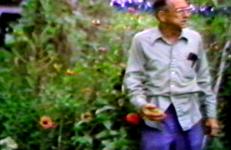
An alcoholic, emaciated father; a grossly obese, tattooed mother; a goofy, hormone-addled brother—all together in a claustrophobic council flat. Welcome to the Billinghams'. Richard Billingham wowed the art scene with his book Ray's A Laugh. Fishtank, his first film, charts the emotional territory of the flat and the family who play out their lives within its confines.
Forbidden to Wander, 2004
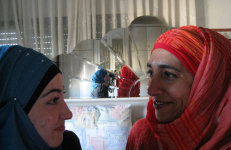
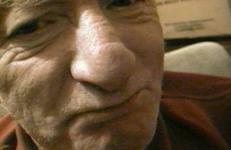
Forbidden to Wander chronicles the experiences of a 25-year-old Arab American woman traveling on her own in the occupied territories of the West Bank and Gaza Strip during the summer of 2002. The film is a reflection on the complexity of Palestinian existence and the torturously disturbing “ordinariness” of living under constant curfew. The film’s title reflects this, as the Arabic words used to describe the imposed curfew “mane’ tajawwul” literally translate as “forbidden to wander”.
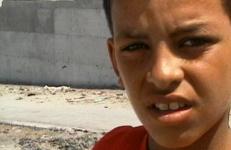
Forest Law, 2014
Forest Law underlines the persistent fact that we are yet to learn to live otherwise in an age defined by the colossal consequences of a new socio-geological order we ourselves have created through irresponsible interactions with Earth’s systems.
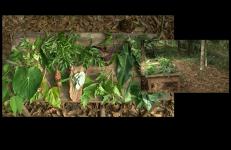
Former East/Former West, 1994
Former East/Former West was shot in Berlin three years after German reunification. Comprised largely of street interviews conducted in various parts of the city, the video documents Berliners' feelings about their national identity. For forty years, people in this divided city lived radically different lives—ideologically, economically, socially and politically. These differences were also reflected in their everyday routines, relationships and experiences, leading Silver to ponder what the two Germanys have in common, aside from language.
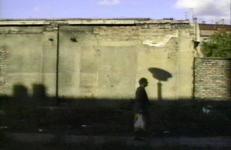
Four More Years, 1972
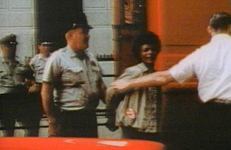
TVTV's inside view of the 1972 Republican National Convention made broadcast history. While network cameras focused on the orchestrated renomination of Richard Nixon, TVTV's rag-tag army of guerrilla television activists turned their cameras on to the cocktail parties, anti-war demonstrations, hype and hoopla that accompanied the show.
In the words of activist Dhoruba Bin Wahad, “Historical and social events are subject to almost instant censorship by those who have better access and control over the medium of communication. It is important that there exist people skilled in the use of the technological instruments of communication who will seek out the real truth behind the headlines and tell it for all to see, know, and hear.”
In the words of activist Dhoruba Bin Wahad, “Historical and social events are subject to almost instant censorship by those who have better access and control over the medium of communication. It is important that there exist people skilled in the use of the technological instruments of communication who will seek out the real truth behind the headlines and tell it for all to see, know, and hear.”
Free-for-all in Sararé, 1992
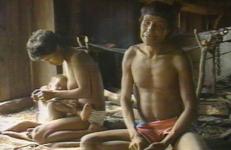
Over 6,000 gold prospectors invade the reserve of the Nambiquara of Sararé, and loggers raid the mahogany-rich forests, which are threatened by extinction. Pressure on the World Bank (with whom the government of Mato Grosso is negotiating a loan) could end prospecting, but the pillage of the forest continues.
In Portuguese with English subtitles.
Directed by Vincent Carelli, Maurizio Longobardi, and Virginia Valadão; edited by Tutu Nunes.
Free-for-all in Sararé, 1992
Over 6,000 gold prospectors invade the reserve of the Nambiquara of Sararé, and loggers raid the mahogany-rich forests, which are threatened by extinction. Pressure on the World Bank (with whom the government of Mato Grosso is negotiating a loan) could end prospecting, but the pillage of the forest continues.
In Portuguese with English subtitles.
Directed by Vincent Carelli, Maurizio Longobardi, and Virginia Valadão; edited by Tutu Nunes.
Free-for-all in Sararé, 1992
Over 6,000 gold prospectors invade the reserve of the Nambiquara of Sararé, and loggers raid the mahogany-rich forests, which are threatened by extinction. Pressure on the World Bank (with whom the government of Mato Grosso is negotiating a loan) could end prospecting, but the pillage of the forest continues.
In Portuguese with English subtitles.
Directed by Vincent Carelli, Maurizio Longobardi, and Virginia Valadão; edited by Tutu Nunes.
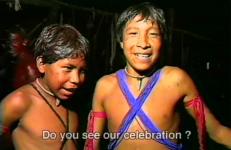
Four Ikpeng children reply to a video-letter from the children of Sierra Maestra in Cuba, introducing their village, families, toys, celebrations, and ways of life with grace and lightheartedness. Curious to know about children from other cultures, they ask to continue the correspondence.
Direction and camera by Karané, Kumaré, and Natuyu Yuwipo Txicão; edited by Mari Corrê.
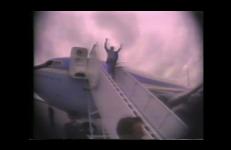
In the wake of Lord of the Universe, TVTV planned to cover the impeachment of Richard Nixon, but, unfortunately, Nixon resigned. The group made a ninety-degree turn to covering the “first hundred days” of the Gerald Ford administration, a cavalcade of photo ops and campaign appearances. In Part One of the four-part series, entitled WIN (referring to the Ford slogan, “Whip Inflation Now”), TVTV goes on a whirlwind across-country trek with Ford, stopping in Sioux City, Iowa, Salt Lake City, and Portland. The show is more about Ford’s public than Ford.
Arguably, the most successful of the four “Gerald Ford’s America” shows was “Chic To Sheik,” a TVTV tour of the private culture of the official Washington. Lead by Megan Williams, they blithely move around an official White House tea for Betty Ford at the beginning and cavort at the Shah of Iran’s birthday party at the Iranian Embassy at the end. Shot with almost open access because this was when even public people, in private, were innocents before a documentary camera. Washington Post Society Editor, Betty Beale, leads the way. A gem.
Girl's Celebration, 1987
Chief Pedro Mãmãindê (who directed the proceedings and the shoot itself) describes the necessity of strengthening the girls of his village by secluding them after their first menses. After several months, the village throws a party, with singing, feasting, and the ritual abduction of the girl by an allied village. When the Nambiquara of Mato Grosso see videotape of themselves performing this ritual, the excess of Western clothing makes them uncomfortable. The ritual is then re-enacted with traditional body painting and adornment.
Girl's Celebration, 1987
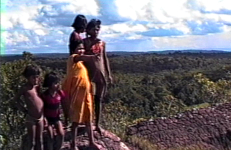
Chief Pedro Mãmãindê (who directed the proceedings and the shoot itself) describes the necessity of strengthening the girls of his village by secluding them after their first menses. After several months, the village throws a party, with singing, feasting, and the ritual abduction of the girl by an allied village. When the Nambiquara of Mato Grosso see videotape of themselves performing this ritual, the excess of Western clothing makes them uncomfortable. The ritual is then re-enacted with traditional body painting and adornment.
Greetings from Out Here, 1993
Spiro traveled for one year on the backroads of the southern United States gathering footage for this mobile video project. Accompanied by her dog Sam and a video camera, she travels from Virginia to Texas and back. Her van (which breaks down frequently) serves as office, apartment, editing suite, and runabout.
H2, 2010
Nurit Sharett visited the city of Hebron over the course of a year, teaching video art to a group of young Palestinian women. Over time the artist established firm relationships with three of her students and their families. The video documents everyday life in that microcosm, dissimilar to any other city.