


Skating softly, but carrying a big stick, performer Kristin Elliott engages in an interlocking series of skits involving simple, slapstick activities performed by a pristine outdoor pool and in a venetian blind windowed corner of a room. Bodies of water - an aquarium is transported into the interior space - become a major link between these two settings. These containers of water end up functioning as both wombs and graves.
Humor
Preserve Your Estate, 1998
This single channel tape was created from a 4-channel live mix of 4 VCRs, an A/V mixer, and a sampler. Hypnotic music, idiosyncratic singing, and soft, yet insistent voiceovers accompany television images portraying notions of happiness, the work ethic, and social success in a subtly alienating video collage. "Repeat with me: I now feel confident about opening to others and projecting charisma."
Pretty Boy, 1994
Tension between a man and his handsome young rival (a Ken doll) erupts into violence. Their interaction devolves from a series of tussles to a spanking.
This title is also available on Joe Gibbons Videoworks: Volume 1.
Primate Cinema: Apes as Family is a drama made expressly for chimpanzees – and the chimps' reaction to its screening at the Edinburgh Zoo. Chimpanzees watch television as a form of enrichment in captivity. But no filmmaker had made a film for a specifically ape audience.
La Profesora, 1993
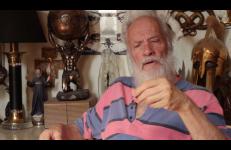
A caricature of a professor teaching English to non-native speakers. Her mannerisms, her accent, the content of her speech—all are absurd, in the tradition of an Ionesco character. Images of the professor alternate with collages, many taken from Bobe’s other works. Through its ironic humor, La Profesora foregrounds the absurdity of teaching English in a country where many cannot read their native language. The prevalence of the English language in post- and neo-colonial societies is thus called into question, both politically and socially.
Psykho III The Musical, 1985
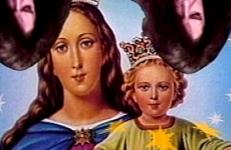
Psykho III The Musical is an intriguing play on the tension between “authentic” and “pop” camp. This celebration of artifice was originally written, directed, and produced by Mark Oates as a stage musical parody following the release of Psycho II in 1983, and was performed at the East Village’s most notorious nightspot — The Pyramid Club. In 1985, after a wildly successful run, Oates reached out to longtime friend and Downtown video artist Tom Rubnitz to produce a video adaptation of the stage musical.
Psykho III The Musical, 1985
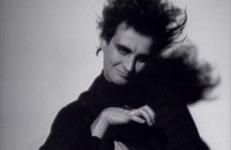
Psykho III The Musical is an intriguing play on the tension between “authentic” and “pop” camp. This celebration of artifice was originally written, directed, and produced by Mark Oates as a stage musical parody following the release of Psycho II in 1983, and was performed at the East Village’s most notorious nightspot — The Pyramid Club. In 1985, after a wildly successful run, Oates reached out to longtime friend and Downtown video artist Tom Rubnitz to produce a video adaptation of the stage musical.
Putting the Balls Away, 2008
Putting the Balls Away is a reenactment of the historic September 21, 1973, tennis match between Billie Jean King and Bobby Riggs, created for broadcast on the 35th anniversary of the original event. The Battle of the Sexes was the most-watched live sporting event at that time, and pitted chauvinist against feminist, when women tennis players demanded equal pay to that of their male counterparts. Both players are performed by Mateik, whose work wages strategic operations to overthrow institutions of compulsory gender. After each game the competitors "switch sides".
Pyramids/Skunk, 2007
Netherlands, January 29th 2006/January 29th 2007
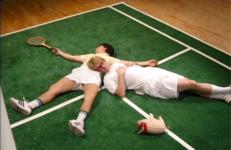
Hamas have just won the Palestinian elections and a chocolate bar in a Rotterdam hotel room eventually reminds the filmmaker that there are more important things going on in the world outside. Exactly one year later he returns to the same city and checks in at a very different hotel. Pyramids/Skunk is a double episode in the Hotel Diaries series, a collection of video recordings made in the world’s hotel rooms, which relate personal experiences and reflections to contemporary conflicts in the Middle East.
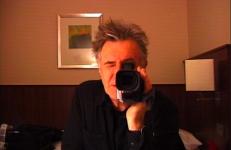
Queer Teen Romance, 2008
Budlong Memorial Middle School is heating up. Queer Teen Romance is a charmingly perverse homage to the after-school special that tackles bullying in a hormone-fueled flurry of forbidden sexual fantasy. When Bryce, the school bully, picks on outcast Kevin, a group of tough (and brightly accessorized) girls decide to teach Bryce a lesson. But maybe Kevin doesn’t want the pain to stop?
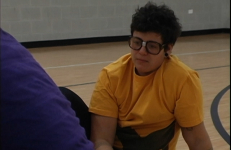
The Rainy Season, 2000
A daily chronicle of the Ashaninka community during the rainy season, recorded on video during a workshop in a village on the Amônia River in the state of Acre. The involvement of the filmmakers with the Ashaninka community makes the film go beyond a mere description of activities, reflecting the rhythm of the village and the humor of its inhabitants.
Direction and photography by Valdete, Isaac, and Tsirotsi Ashaninka, Llullu Manchineri, Maru Kaxinawá, Nelson Kulina, Fernando Katuquina, and André Kanamari; edited by Mari Corrêa.
In Ashaninka with English subtitles.

Regression, 1999
A portrait of the artist as a not-so-young man. The filmmaker attempts to enter the digital age by making a new video version of one of his old films.
"The award of the Short Film Festival goes to a video in which the reflection of artistic work becomes a form itself. John Smith manages to give us a self-ironic humorous experiment about art and time."
—Prize of the International Short Film Festival, Oberhausen 2000
This title is also available on John Smith: Program 2.

Rescue Parables, 1994
Various scenarios are envisaged where a rescue might be possible. Props include a hoist, a trolley, various doors and windows, ladders and a length of hose. It is unclear whether our two heroes help or hinder one another. What is certain is that no rescue is in sight.
This title is also available on HalfLifers: Rescue Series and HalfLifers: The Complete History.
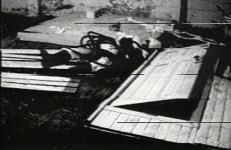
Return to Rescueworld, 1996
Burns and Discenza continue to battle invisible forces with the use of various children’s toys, cars and a mechanical digger, a paddling pool, rubber rings and ladders. Eventually they escape the scene of their distress in a hatchback car.
This title is also available on HalfLifers: Rescue Series and HalfLifers: The Complete History.
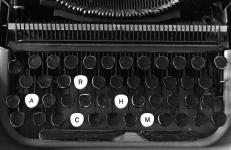
"A major influence for generating ideas for me was not what I could contrive on my desktop, but being open and receptive to “accident”. For instance, one evening in 1972 while typing a syllabus for a class on my old Smith Corona typewriter, I happened to see on the TV a documentary by Leni Riefenstahl. German troops were marching, and I found that I could duplicate the “ta ta tum, ta ta tum, ta ta tum tum tum” of the drumbeat by typing “mar mar march mar mar march.“ Had not the broadcast of this film taken place while I was typing, I would never have thought of this concept.
River Rites, 2011
“Animists are people who recognise that the world is full of persons, some of whom are human, and that life is always lived in relationship with others.”
-- Graham Harvey, Animism
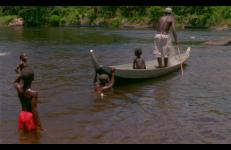
Trance dance and water implosion, a kino-line drawn between secular freak-outs and religious phenomena. Filmed in a single take at a sacred site on the Upper Suriname River, the minor secrets of a Saramaccan animist's everyday are revealed as time itself is undone. Rites are the new Trypps -- embodiment is our eternal everything.
Sabotaging Spring, 1991
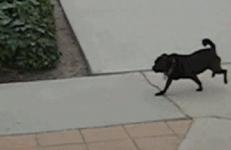
“It’s spring, it’s spring, and I feel I’m giving birth myself, to something monstrous, something ugly.” Gibbons enters the woods to begin his destructive campaign against spring, snapping the buds off trees while babbling maniacally. Sabotaging Spring is an impressionistic peek at Gibbons’s paranoid fancy; he explains the facts of life, evolution, and whistling to his dog Woody.
This title is also available on Joe Gibbons Videoworks: Volume 1.
Saddle Sores, 1999
Video artist meets a handsome and enigmatic Marlboro Man; video artist gets a sexually transmitted disease. In a wry and pointed work that’s part Ibsen and part Danielle Steele, Vanalyne Green reworks the sex-education film to take a critical look at cherished stereotypes about romance, the American West, and cowboys. Expanding on a body of work that investigates the idea that public spaces are gendered, Green revisits the myth of the rugged outdoors, and the West will never be the same.
School Fag, 1998
A fast-talking and fabulous teen recounts his experiences as an out and loud Toronto queer. With catty wit, he recalls his confrontations with straight students at school and his gay prom at a Toronto gay youth community center, told with a flair for drama and punctuated with enactments of his Wonder Woman fantasies. Fung keeps the format simple, giving voice to his subject.
Selected Works: Reel 1, 1970
In Reel 1, newly re-mastered in 2005, a series of vignettes and jokes to camera take place, some starring Wegman’s droll and obliging canine partner Man Ray. Both the human body and props are employed to amusing effect: lamps talk, a microphone is dragged around, stomachs sing. At one point, Wegman dribbles milk on to the floor, to be lapped up by a thirsty dog.
Contents:
Microphone, 0:47
Pocketbook Man, 1:19
Anet and Abtu, 0:47
The Ring, 1:11
Randy’s Sick, 0:16
Milk/Floor, 1:02
Selected Works: Reel 2, 1972
Re-mastered in 2005, Reel 2 features a series of demonstrations and durational tests: how to protect oneself from germs; how to turn a roll call into a role play; and an excruciating exercise in desire, as Man Ray attempts to get his just rewards. While entertaining, these humorous pieces also parody television culture and work to highlight issues of consumerism.
Contents:
Sanforized, 0:47
Coin Toss, 2:11
Monkey Business, 1:06
Same Shirt, 0:32
Selected Works: Reel 3, 1973
The works on Reel 3 were produced during 1972-73, and re-mastered in 2005 when several newly available titles were added. The focus here is on social relationships and attaining the perfect life, be it through making the right decision, getting something for nothing, or just having it all. Many of the comic skits parody television ads and infomercials, and Man Ray has to make some consumer choices.
Selected Works: Reel 4, 1973
A newly re-mastered collection of 22 comedic performances to camera, produced during 1973-74. Absurd stories mix with word play; product demonstrations extol the virtues of a specially modified cocktail tray or canine selling aid; and throughout it all, Man Ray. May Ray woken by an alarm clock, tormented by paper-throwing and map-reading, and ever attempting to understand his master.
Contents:
Wake Up, 1:33
Trip Across Country, 0:50
Down Time, 0:36
Laundromat, 0:43
Selected Works: Reel 5, 1974
A newly re-mastered collection of 17 vignettes and performances to camera, produced during 1974-75. Some use props and sight gags to preposterous effect; others star Man Ray, lapping milk from a glass, stopping marbles and dropping balls. Many of the pieces feature off-screen dialogue, including a comparison of the differences between audio- and videotape, and video and film.
Contents:
Nocturne, 7:49
Stalking, 2:06
Audio Tape and Video Tape, 2:04
Dancing Tape, 5:27