


LGBTQ

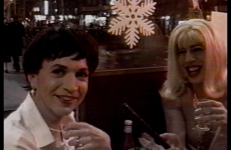
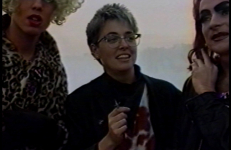
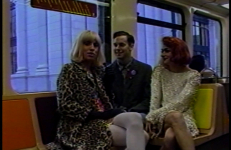
In this video, Glennda is joined by social critic and feminist scholar Camille Paglia in New York's fashion district. The pair visit designers studios to discuss their respective styles and creative processes. Additionally, Glennda and Camille explore fashion's relationship to gender and feminism, ultimately recreating an iconic scene from Breakfast at Tiffany's.

An episode of Glennda and Friends, hosted by Glennda Orgasm and Camille Paglia.
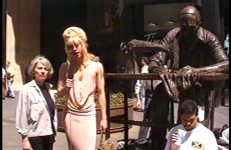
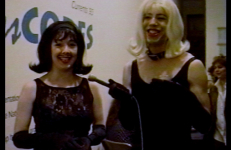
In this video, Glennda and sex activist Chris Teen attend the opening of Dress Codes at Boston's Institute of Contemporary Art. They interview museum staff, artists, and other attendees to explore how an exhibition centered upon gender nonconformity will be received by both queer communities and the general public. Glennda and Chris Teen discuss the importance of visibility for marginalized communities, and tap into gender discourses as they existed in the early 1990s.

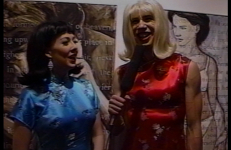
In this video, Glennda Orgasm and Chris Teen travel to Washington, DC to attend a feminist art exhibition titled Walk the Goddess Walk at the District of Columbia Arts Center. The pair talk to the owner of the gallery, artists included in the show, and attendees, including Francy Caprino, Teena Cromwell, Andrew Melon, Camille Paglia, and Joseph Virgilio.

An episode of Glennda and Friends, hosted by Glennda Orgasm and Chris Teen.

In this video, Glennda and Judy LaBruce (Bruce LaBruce) visit the auction house Christie's East on New York's Upper East Side to view Judy Garland memorabilia that is being auctioned off. They attempt to rescue Garland's Oscar from those trying to profit from the auction.

An episode of Glennda and Friends, hosted by Glennda Orgasm and Judy LaBruce.

In the video Glennda does DC, Glennda interviews people in Washington D.C. about the topic of gay rights. As the National Gay and Lesbian Task Force Conference is going on simaltaneously, she asks people if they were aware of this, and if they believe that there should be a gay rights bill.

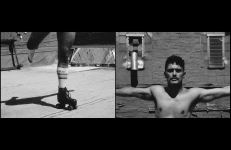
A film titled Dance Movie (or, alternatively, Rollerskate) appears in many Warhol filmographies, but no work with this title has been found in the archive. The lost film, starring dancer Fred Herko, was shot in 1963. A year later, Herko leaped out of an open window while dancing to Mozart’s Coronation Mass in C Major. Inspired by descriptions of the missing film and the memoir of Herko’s best friend, the poet Diane Di Prima, Goddess of Speed poetically reimagines the last days of the young performer.

Gone, 2001

Gone is a two-channel installation based on the second episode of An American Family — the landmark PBS verité documentary about the Loud Family of Santa Barbara, California. Dougherty has created a free-form variation on the theme of parental visits to wayward queer children by mapping the dialogue and plot onto a contemporary community of artists and writers in New York today, paying homage to the art underground and the city itself.

With an all-female cast, featuring Suzie Bright as John Lennon, Cecilia Dougherty's Grapefruit plays with the romanticized history of the iconic Fab Four, gently mocking John and Yoko’s banal squabbles and obsessive rituals of self-display. Based obliquely on Yoko Ono’s book, the piece works on many levels to reposition this mythic tale of the Beatles by casting '80s women in mod drag—effectively mapping the lesbian sub-culture onto heterosexual mass culture.

Spiro traveled for one year on the backroads of the southern United States gathering footage for this mobile video project. Accompanied by her dog Sam and a video camera, she travels from Virginia to Texas and back. Her van (which breaks down frequently) serves as office, apartment, editing suite, and runabout.

A Hand in Two Ways (Fisted) is a looping meditation on night as space of mysterious energetic transmissions. Animals, human bodies, children, ritual, and performance are investigated as zones of conflict, desire, and a visceral movement that is more felt than seen.

A Hand in Two Ways (Fisted) is a looping meditation on night as space of mysterious energetic transmissions. Animals, human bodies, children, ritual, and performance are investigated as zones of conflict, desire, and a visceral movement that is more felt than seen.

Handy Man, 1999

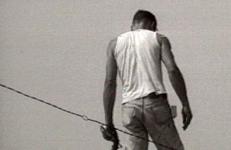
Handy Man examines the window as a site of voyeurism and surveillance. With his Hi-8 camera, Henricks documents two workers in his interior courtyard. The camerawork has a secretive and furtive feel, treating the male body as an erotic object. This footage forms the basis of a video which attempts to implicate the viewer in processes of exhibitionism and image fetishization. Handy Man is part of a trilogy of works exploring one of the principle metaphors of video: the window.

By using clips of evil queens/witches this video plays off the sadomasochistic lesboerotic subtexts commonly found in children's entertainment. A helpless maiden is tiring of her consensual s/m relationship with her lover, and "evil" queen. She wants to break up. An impassioned monologue in a dungeon with our heroine in wrist cuffs quickly becomes an emotionally messy ending in flames. This video was inspired by the artist's own childhood "kiddie porn", Disney movies which turned her on to no end and kicked off many a prepubescent masturbation session.

Hey Bud, 1987

Hey Bud revolves around the suicide of Bud Dwyer, a government official who killed himself before a television audience. Zando compares the suicide to a kind of pornographic sex act that plays upon the tension created between exhibitionist and voyeur. It forces viewers to take either an empathetic position vis-a-vis the exhibitionist, or to act as voyeur through release of the repressed desire to see the forbidden face of Death. The piece attempts to understand the power gained through exhibitionism, and how that power is lost through death.

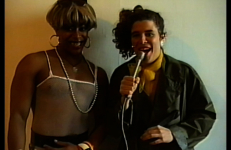
Hokey Sapp Does SPEW features Kate Schechter performing her invented media personality Hokey Sapp interviewing some of the luminaries at SPEW: The Homographic Convergence, a queer zine convention hosted by Randolph Street Gallery in Chicago in May, 1991. SPEW brought together artists, writers, editors of zines, performers, video-makers, activists, and bands from throughout the US and Canada, and marked the explosion of queercore subcultures through unabashed fashion, outrageous politics, humor, and joy.

Klaus Nomi (born Klaus Sperber) was an underground superstar in the East Village arts scene in the 1970s and early 1980s. Known for his dramatic attire and make-up, and his theatrical stage presence, Nomi was a countertenor and could achieve a wide vocal range, allowing him to include operatic embellishments to his musical numbers. He died in 1983 and was one of the earliest artists to die from AIDS.

Horsey, 2018

An allegory recycling images from the past, still relevant to the present moment.

“Horses are lucky, they’re stuck with the war same as us, but nobody expects them to be in favor of it, to pretend to believe in it.”

— Louis-Ferdinand Céline, Journey to the End of the Night, 1932

How I Love You is an exploration of sexuality among gay men in Lebanon. A couple and three individuals talk about their sex lives, about commitments and failures, about their relationships to their bodies, about their passions and love in a society where homosexuality is still punished by imprisonment. The video uses light to produce a white veil that obstructs seeing, hence rendering character identification almost impossible. Through this obstruction, the video locates itself within a specific social context. 

This rapid-montage music video for John Sex’s song “Hustle with My Muscle” portrays the singer as a ladies’ man with ample endowment to share. “Can you handle all the man below my belt?” he provocatively asks.

This title is only available on Tom Rubnitz Videoworks: Sexy, Wiggy, Desserty.

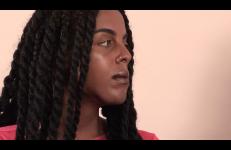
Juliana Huxtable was born in Texas and studied at Bard College, NY. An artist working across video, photography, poetry, and music, her practice demands a reexamination of the canon of art history in order to break the cycle of misrepresentation and under-representation in the contemporary art world.

This video is about seduction. The audience is seduced by the female narrator, while at the same time repelled by the seductress' desperate need for love and approval. The title is ironic: although the narrator "likes girls for friends better than boys," the attraction is masochistic and destructive.

Matt Wolf returns to Joe Brainard's iconic poem I Remember (1970) in this videowork. His archival montage combines audio recordings of Brainard reading from the poem, as well as an interview with his lifelong friend and collaborator, the poet Ron Padgett. The result is an inventive biography of Joe Brainard, and an elliptical dialog about friendship, nostalgia, and the strange wonders of memory.

Setting her pixelvision camera on herself and her room, Benning searches for a sense of identity and respect as a woman and a lesbian. Acting alternately as confessor and accuser, the camera captures Benning’s anger and frustration at feeling trapped by social prejudices.

This title is also available on Sadie Benning Videoworks: Volume 1.

In the Queen City is a series of three videos shot in Buffalo, New York that were produced following an invitation from Hallwalls Contemporary Art Center as part of their Ways In Being Gay festival. 

An episode of The Brenda and Glennda Show, hosted by Brenda Sexual and Glennda Orgasm. Production Support Provided by Hallwalls Contemporary Art Center.

In the Queen City is a series of three videos shot in Buffalo, New York that were produced following an invitation from Hallwalls Contemporary Art Center as part of their Ways In Being Gay festival.

An episode of The Brenda and Glennda Show, hosted by Brenda Sexual and Glennda Orgasm. Production Support Provided by Hallwalls Contemporary Art Center.