


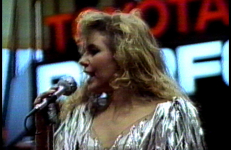
Shot in video-8 at the 1988 Chicago Auto Show, this work examines the artist's personal history with automobiles against the back-drop of an auto plant closing in Kenosha, Wisconsin. The personal stories of real life relationships between people and their cars is dramatically counterposed to the glaring commercialism of the automobile industry and the economic crisis that industry has imposed on the American union workers.
Chicago Art
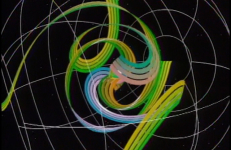
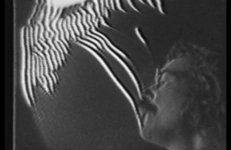
Air on the Dirac Strings, 1993
Computer graphics by Dan Sandin and colleagues.
Concept by George Francis, Louis Kauffman, Dan Sandin
Computer graphics by Chris Hartman, John Hart –Dance: Jan Heyn Cubacub
Edited by Dana Plepys
Music by Sumit Das
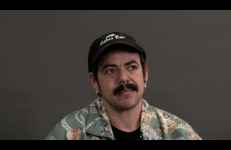
Angelo Madsen is a multidisciplinary artist and filmmaker whose work explores queer embodiment, desire, memory, and subcultural archives through experimental documentary, narrative cinema, and hybrid forms. Working across video, installation, animation, and sound, Madsen began his artistic practice in the early 2000s by documenting intimate, often overlooked moments in queer and punk subcultures. He repurposes personal footage, found material, and handwritten texts into nonlinear, emotionally resonant structures that reflect both inner states and broader cultural shifts.
Ashley, 1997
Animal Charm's Ashley seems to develop a conventional story about a modern mother and wife with typically modern desires. But the insertion of incongruous soap opera scenes soon ensures that the seductive images take on an absurd and oppressive charge. “The antiseptic cleanliness of the imagery has a superficial appeal, but begins to feel claustrophobic — or toxic — after prolonged exposure.”
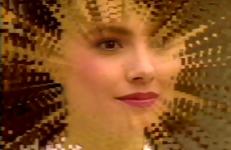
Aura of IEVE, 1975
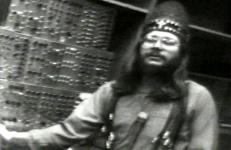
Aura of IEVE, edited by Phil Morton, is video documentation of the first Interactive Electronic Visualization Event (IEVE) at the University of Illinois Circle Campus. Unlike IEVE Aura, which features the image processed and audio synthesized video from the event, the camera instead focuses on the artists creating the video: Tom DeFanti on the Digital Keyboard (computer), Dan Sandin on the Image Processor, and Bob Snyder on the sound keyboard.
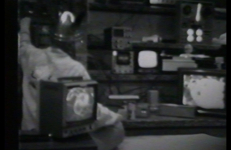
The BLVD, 1999
An experimental documentary about the street drag racing scene on Chicago’s near West Side. This is a rambling textured film about obsession. It is about the mythos of speed for its own sake, but it’s also about waiting, and it is through waiting that The BLVD exposes community, inner-city landscapes and nomadic experiences of place. The film treats storytelling as a living medium for determining history. And it commands respect, for those who transform cars, or anything else, through passion.
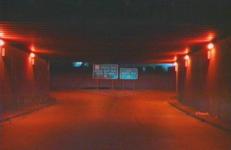
Phyllis Bramson (b.1941) is a Chicago painter whose post-imagist style emphasizes content and the deeply personal. Bramson’s paintings are private scenarios that include figures (or performers) who carry out highly charged activities with strong psychological meaning. They perform in highly theatrical, Oriental settings of almost cubist space and acid greens, yellows, and reds.

Roger Brown's (1941-1997) quirky, stylized paintings were influenced by such disparate sources as comic strips, hypnotic wallpaper patterns, medieval panel paintings, and early works of Magritte. His work is epitomized by a series of claustrophobic urban scenes with their drop-curtain-like gray clouds and cardboard-box apartment buildings, suggesting an amalgamation of boyish enthusiasm for model making and adult despondency. In 1996 he donated his apartment, complete with all of his belongings, artworks, writings, and automobile to the School of the Art Institute in Chicago, where it is on public display.
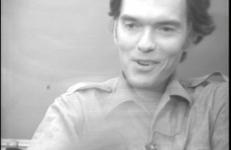
Class Assignment, 1972
The video opens with visual feedback and various sounds including snoring, whistling, and other generated audio. The video then slowly transitions into Phil Morton’s monologue and a solarized image. Phil is in front of video equipment racks at the Governors State University—a public university in University Park, Illinois. He starts by discussing events at the school, and then draws the viewers’ attention to the video waveform behind him as he sways. He says that “all things in the universe are so interconnected,” and ends up in laughter.
comunista!, 2001
"You are invited to Jim’s party! Snake optional."
--Cinematexas Festival (Austin, 2001)
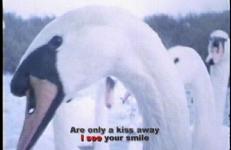
"Three more sing-alongs, this time with swans, a snake, and the Red Army Chorus."
--L.A. Freewaves Festival
This title is also available on Jim Finn Videoworks: Volume 1.
Dan Sandin: An Interview, 2024
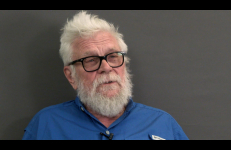
Dan Sandin’s pioneering contributions to electronic and computational image-making stem from an unusual blend of physics, photography, and a deep reverence for both nature and collaborative learning. Trained at Shimer College and steeped in mathematics and optics, Sandin rejected conventional art paths, instead forging a unique trajectory through technological invention and experimental pedagogy.
Danny, 1987
This video is a moving personal documentary about Danny, a friend of Kybartas who died of an AIDS-related illness in 1986. This powerful work explores the reason for Danny’s return home and his attempts to reconcile his relationship with his family members who had difficulty facing his homosexuality and his imminent death. Retracing Danny’s memory of his once-high lifestyle in the clubs and gyms of Miami, Danny avoids sentimentalizing its subject as it juxtaposes images, text, and voice-over to build a sense of the psychological struggle brought on by Danny’s impending, premature death.

Decision 80, 2003
Appropriated network-TV footage of Jimmy Carter’s "I see risk" speech from the 1980 Democratic Convention meets Reagan’s gloomy inaugural ride through D.C.: "If you succumb to a dream world, you’ll wake up to a nightmare."
This title is also available on Presidents and Elections.

Phil Morton and Dan Sandin introduce video equipment and editing techniques to St. Olaf College students—a private liberal arts college in Northfield, Minnesota. They display constant playful interactions, from deliberately making audio feedback to mimicking the feedback sounds with voice. The workshop is very laid-back and carefree which is typical of the '70s counterculture and DIY Video communities.
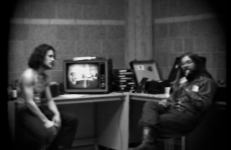
Dan Sandin demos the Digital Image Colorizer, a digital module that was part of the analog Image Processor.
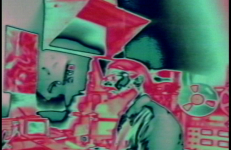
Dinner at Jane's, 2000
Executive produced by Sara Diamond at the Banff Art Centre, co-produced by Michelle Baughn and Suzanne Lacy, directed by Tom Weinberg and Dick Carter, and edited by Holen Kahn.
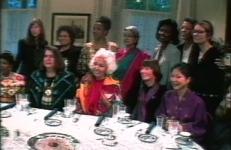
el güero, 2001
"A refreshing look at karaoke, psychedelic dance moves, and donuts all mashed together into a small and swinging film about a man who considers his private thoughts and private jokes worth sharing with a large audience. And it's unlikely that many would disagree."
--Impakt Festival, Utrecht, The Netherlands, 2001
This title is also available on Jim Finn Videoworks: Volume 1.
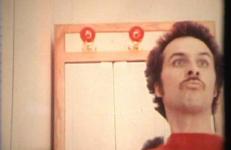
Elisabeth Subrin is an artist and filmmaker who engages a wide range of genres, forms, and contexts to create conceptually driven projects in video, film, photography and installation. Her work seeks intersections between history and subjectivity, investigating the nature and poetics of psychological "disorder," the legacy of feminism, and the impact of recent social and political history on contemporary life and consciousness.

Energy Country, 2003
The frenzied detritus of trading floors, smart weaponry and the religious right are woven through the petrochemical landscapes of Southeast Texas. This short video harangue questions land use policy as it serves the oil industry, patriotism as it absolves foreign aggression, and fundamentalism as it calcifies thinking.
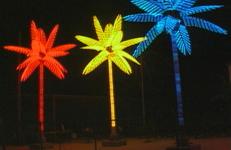
Family Court, 1998
Family Court introduces us to the world of good, clean, family fun and leisure.
This title is also available on Animal Charm Videoworks: Volume 2, Hot Mirror Mix.
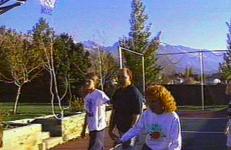
In 1973, Dan Sandin designed and built a comprehensive video instrument for artists, the Image Processor (IP), a modular, patch programmable, analog computer optimized for the manipulation of gray level information of multiple video inputs. Sandin decided that the best distribution strategy for his instrument "was to give away the plans for the IP and encourage artists to build their own copies.
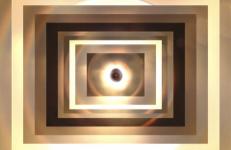
Decidedly low-tech, this optical abstraction begins with a shot of an aluminum reflector inside a lamp; a lightbulb in the shot’s center flicks on and off. As the video plays on, nearly identical shots are superimposed, but at a steadily decreasing scale, resulting in an array of nested rectangles. The rhythmic blinking of intense light- accompanied by audible clicks from the plastic light switch- presents the viewer with a swift progression of blinding geometries, (with) dizzying effects.
-- Michelle Grabner, Artforum, May 2010
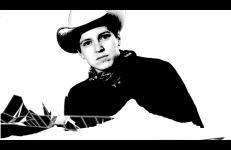
"i am very grateful that my 鬼鎮 (Ghosttown) series has shown internationally over the last couple years and is recognized by viewers, reviewers, critics, and curators as doing decolonizing work as a feminist project that queers and glitches the Western genre. 鬼鎮 (Ghosttown) questions the quintessentially American Western in the forms of experimental films and games that are made from glitches and noise, pushing boundaries of legibility and tipping over threshold states of stability.
Habit, 2001
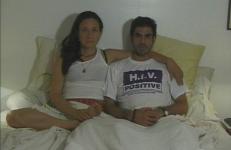
Habit is an autobiographical documentary that follows the current history of the AIDS epidemic along dual trajectories: the efforts of South Africa’s leading AIDS activist group, the Treatment Action Campaign, struggling to gain access to AIDS drugs and the daily routine of the videomaker, a veteran AIDS activist in the U.S. who has been living with AIDS for more than ten years.
Hard and Flexible Music, 1988
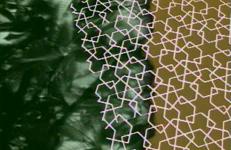
In this video diptych, Snyder uses image and music to depict opposing forces in semi-abstract terms. Exploring processes of fracture and permutation, Hard and Flexible Music contrasts two groups of images, gridded architectural structures and fluid natural imagery, on opposite sides of the screen. The experimental music soundtrack carries two synthesized tracks with differing musical qualities.
This title is also available on Bob Snyder: Sound and Video 1975-1990.