


La Mesa explores the intersections of memory, identity and queer desire. It recreates fragmented and romanticized stories of a childhood in rural Mexico as told by the artist’s father. These disjointed vignettes are interwoven with queered reenactments of scenes from popular culture. The artist casts himself in the old Mexican films and American Westerns he grew up watching with his family in California. He appears as the romantic lead opposite the male actors, including Pedro Infante, Mexican national hero and the filmmaker’s childhood crush.
Autobiography
Laurel and Susan, 1973
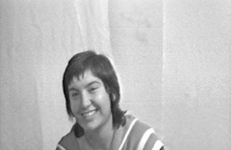
Laurel Klick and I were members of the feminist art program at CalArts and became close lifelong friends. Laurel is behind the camera as I recount my one-sided flirtation with a guy who worked at CalArts in the equipment “cage” - the cage where I checked out the video Portapak - the Portapak we utilized to record my anecdote. My story about an everyday interaction would become a trademark of my work. “Laurel and Susan” was not edited or presented publicly until 2022.
Lilo & Me, 2003
Which celebrity do you most resemble? For artist Kip Fulbeck, this question starts a rollicking ride that is part autobiography, part family portrait, part pop-culture survey, and all Disney* all the time. Watch as Fulbeck documents his uncanny resemblance to Pochahontas, Mulan, Aladdin, and other "ethnically ambiguous" animated characters. Both hilarious and touching, this educating video examines the muting of race in mainstream media and its effects on multiracial Americans. *Disney is a registered trademark of Disney Enterprises, Inc.
Living Inside, 1989
When she was 16, Benning stopped going to high school for three weeks and stayed inside with her camera, her TV set, and a pile of dirty laundry. This tape mirrors her psyche during this time. With the image breaking up between edits, the rough quality of this early tape captures Benning’s sense of isolation and sadness, her retreat from the world. As such, Living Inside is the confession of a chronic outsider.
This title is also available on Sadie Benning Videoworks: Volume 1.
The Living Wardrobe, 2024
Martí arrives in Bilbao for an artistic residency. His clothes take up only a small part of the huge wardrobe in his new room. When he meets someone, the wardrobe gradually begins to fill up. But where did the emptiness go, the free space, the little corner of his own? Did the wardrobe swallow it all, or was it love?
In Spanish and Catalan with English subtitles.
Looking for Letine, 2024
Unable to locate the grave of Letine—leader of a 19th century acrobatic cycling troupe (and buried locally)—I went home and wondered.
And then I made this film.
Equal parts experimental animation, stylised domestic drama, and autobiography accompanied by reflections on mortality, filmmaking, and magic. Plus more.
— Paul Tarragó
Lore, 2019
Images of friends and landscapes are cut, fragmented, and reassembled on an overhead projector as hands guide their shape and construction in this film stemming from Hollis Frampton’s Nostalgia. The voice tells a story about a not too distant past, a not too distant ruin, with traces of nostalgia articulated in terms of lore; knowledge and memory passed down and shared not from wistful loss, but as a pastiche of rumination, reproduction, and creation.
Low Light Life, 1988
Shot in low-light style, Kuchar documents his experiences with various underground filmmakers such as James Broughton and Ken Jacobs, then moves on to the other side of Hollywood lifestyle to visit Nicholas Cage. Images of crowds and facial close-ups comprise this haunting tape.
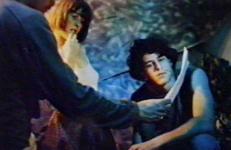
LYNDALE, 2018
LYNDALE is a story of shifting family dynamics, told through the relationship of two brothers. Shot on ten different video formats, this experimental documentary is both the story of a Chicago family, and a record of the digital revolution in the early 2000s. The piece takes place over a six-year period during which filmmakers Oli Rodriguez and Victoria Stob shared a house with Rodriguez’s brother, Jeff.
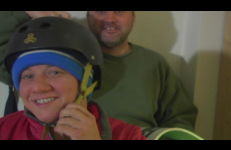
LYNDALE, 2018
LYNDALE is a story of shifting family dynamics, told through the relationship of two brothers. Shot on ten different video formats, this experimental documentary is both the story of a Chicago family, and a record of the digital revolution in the early 2000s. The piece takes place over a six-year period during which filmmakers Oli Rodriguez and Victoria Stob shared a house with Rodriguez’s brother, Jeff.
Mecca of the Frigid, 1988
George visits underground filmmaker Robert Nelson in Milwaukee, and they brave the cold on Lake Michigan.
Medicine Bundle, 2020
Medicine Bundle is about a bundle that was used in my family to heal my Great Great Grandfather from a smallpox epidemic and a life threatening wound from a gatling gun used against him during the Battle Of Cutknife Hill in 1885. The bundle was again used in 1918 when my Grandfather contracted the Spanish Flu as a baby. It was buried in an unmarked grave to protect it from grave robbers, but the spirit within the bundle has continued to protect our family from more modern psychological effects of colonization like depression.
Metropolitan Monologues, 2000
The New York City summer is fueled by the sultry emanations of hot air that tumble off the tongues of potential thespians as they attempt to decipher the gastric guesswork embedded in the prose of the pre-production process. The video camera flits across the boroughs of NYC in a splash-dash sojourn of sumptuous banquets and bohemian bombast, while the down-to-earth wisdom of the seeing impaired helps to guide the protagonist into detours of wisdom befitting his putrid project.
A chance to view the upper Bronx as a mantle of whiteness cloaks its natural splendor like icing on a cake and things all blubbery bob to the surface for air and a sniff of the "good life."

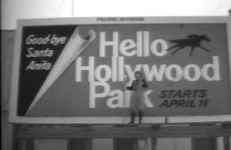
Looking like a 1970’s version of “Rosie the Riveter”, Mogul takes on the persona of an artist who makes a living posting billboards on the Sunset Strip in Hollywood. As Mogul recounts her climb up the billboard “ladder”, she realizes that the only way to truly make a “name” for herself is to create her own billboard. And so she does.
The Mom Tapes, 1974
Segalove takes her mom as subject in these short pieces, recording her stories, her advice, and her daily routine. What results is a portrait of a contemporary mother-daughter relationship, touchingly devoid of drama and full of whimsical humor. For example, in one piece, Ilene’s mother laments over a pair of shoes her daughter has chosen to hang on the wall instead of wearing, saying,”With you, everything is art.” In another segment the camera focuses on a pair of unoccupied, overstuffed chairs.
Muffled Darkness, 1987
George is invited to the AFI Video Festival to see the screening of his tape, Video Album 5: The Thursday People, but detours into a melodrama about the fear of internal spaces in buildings.
My Dinner with Weegee, 2001
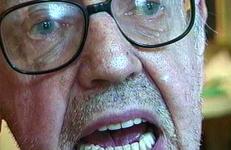
In My Dinner With Weegee Donigan Cumming weaves together two life stories. The central figure, a man in his seventies named Marty, remembers his experiences in New York as a young Catholic labour organizer and peace activist, his friendships with David Dellinger, the Berrigan brothers, Bayard Rustin, Weegee, and James Agee. This mixture of first-hand knowledge and gossip brightens Marty’s dark passage—he is old, sick, depressed, and alcoholic.
My Mother's Place, 1990
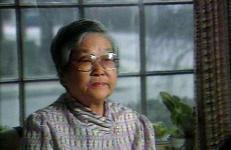
My Mother’s Place is an experimental documentary focusing on the artist’s mother, a third-generation Chinese-Trinidadian who at 80 still has vivid memories of a history lost or quickly disappearing. She conveys these with a storytelling style and a frankness that is distinctly West Indian. A tape about memory, oral history, and autobiography, My Mother’s Place interweaves interviews, personal narrative, home movies, and verité footage of the Caribbean to explore the formation of race, class, and gender under colonialism.
Nine Fish, 1996
From childhood memories to recurring nightmares, Nine Fish attacks and illuminates the indecision and confusion surrounding euthanasia and care of the elderly in the United States. In this deeply spiritual and personal video, director Kip Fulbeck chronicles his Cantonese grandmother's physical decline and its continuing impact on his family. The shifting complexities of personal identity, family communication, and cultural assimilation are explored through nine semi-fictional stories.
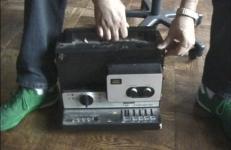
This piece purports to be about the discontinuation of the much-loved format, Kodachrome, and with it the further endangerment of super-8 film. But it has other agendas of reclamation and personal reckoning that are its true subject matter.
The Nutrient Express, 2010
A trip to Winnipeg introduces the viewer to moments of Canadian cuisine and to the easily digestible tidbits that make up the WNDX Film/Video Festival. Come join the movie buffs as they beef up on eye candy and tummy truffles, all the while indulging in a masticating miasma of minutia that's easy to swallow. Wash it all down with some river views and Mr. Coffee secretions and you'll get a taste of the treats that await all who head north to appease the more southerly rumblings of the human anatomy.
Obsessive Becoming, 1995
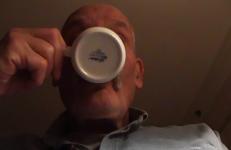
This surreal, free-form autobiography is concerned with childhood and adult rituals, and the longing for meaning and connection during the often wildly absurd events of early life. Obsessive Becoming returns to Reeves’s early exploration of personal narrative forms, poetry, and his interest in creating a more spontaneous and direct fusion between language and video. Words and images of the expectations and disappointments of coming of age break down the boundaries of both mediums.
OPERATION INVERT, 2003
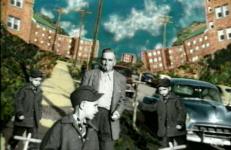
Are gender outlaws considered the new biological terrorists seeking weapons of mass bodily destruction? OPERATION INVERT compares the different regulations mediating botox-related plastic surgery and gender reassignment "sex change." Historical medical assessments of the invert (homosexual and transsexual) "condition" reveal seemingly outdated absurdities about outsider deviance. Nonetheless, current institutional loopholes governing gender re-assignment surgery suggest a fresh resurgence of loony pathology and diagnosis.