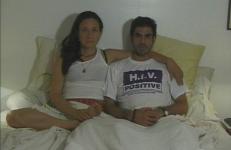



The sonic fabric of 2nd Person, [originally] a multi-channel video installation, is formed through an array of women’s voices orchestrated as parallel tracks in a musical composition. The speakers, all women I have intimately known at different points in my life -- my child, my mother, my best friends, students, mentors -- talk with me about aging, growing up, death, motherhood, love and loss.
Autobiography
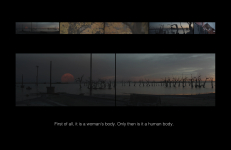
3 Cars, 1988
Shot in video-8 at the 1988 Chicago Auto Show, this work examines the artist's personal history with automobiles against the back-drop of an auto plant closing in Kenosha, Wisconsin. The personal stories of real life relationships between people and their cars is dramatically counterposed to the glaring commercialism of the automobile industry and the economic crisis that industry has imposed on the American union workers.
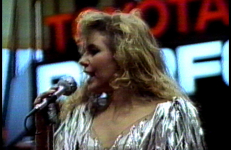
Adresse Permanente, 2014
A son discreetly records fleeting moments in his parents’ suburban home. An intimate portrait of a stable life lived according to the rules of society.
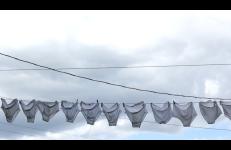
This essay film confronts questions of accessibility through the filmmaker’s attempt to record their open-heart surgery. The film follows them, as they prepare for the surgery: watching medical imaging of their body with friends, revisiting a former lover, preparing for their mom to come to New York, documenting their family's arrival, and ultimately being admitted to the hospital.

The Agonal Phase, 2010
In the aftermath of a death things may seem very quiet, but there are struggles going on so deep not even those who struggle can recognize them. This film looks and listens for signs of those struggles. Psychoanalytic interjections consider the nature of time and rumination, and are used to step outside of the terribly interiorized state of mourning.
-- Jennifer Montgomery
Animal Attraction, 2000
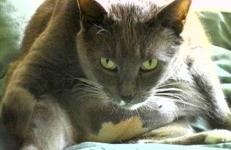
Animal Attraction is a documentary about the relationship between people and animals that questions the way we project our hopes and desires onto our pets, and ascribe human qualities and attributes to their gestures. The video was inspired by the plight of the filmmaker who was frustrated by the obnoxious behavior of her cat, Ernie. As a last resort, she gave in to a friend's suggestion to contact an animal communicator. This is her journey with interspecies telepathic communicator, Dawn Hayman, from Spring Farm CARES, an animal sanctuary in upstate New York.
Annie Lloyd, 2008
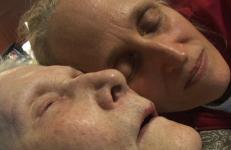
Annie Lloyd is a daughter's poetic documentation of the last few years of her mother's life and an intimate portrayal of the creativity and wisdom of old age.
This title is also available on Cecelia Condit Videoworks: Volume 2
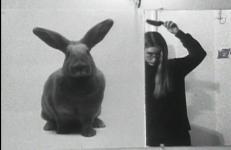
Jennifer, an intelligent but insecure 14-year-old student at a boarding school, seduces her married dormitory counselor, a photographer who has offered to teach her about his art and winds up shooting her in the nude. She is naive, and he manipulates her into an affair that eventually is discovered. Years later, as the photographer is being investigated by the FBI, the adult woman remembers her first love as a case of herself watching the artist who watched her.
Being John Smith, 2024
"An autobiographical reflection on his unassuming name leads the filmmaker down a wayward path through family photographs, personal archives, and internet searches.
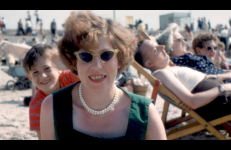
This strange, lyrical performance video diary is a millennial reflection on the impossibility to "reveal" one’s self in stormy times such as ours. The piece is also about the intricate connections between performance and everyday life; about language, identity, love, nostalgia and activism amidst the California apocalypse.
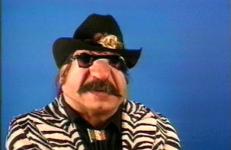
"...a rumination, a series of borrowed 'dialogues' out of an ongoing argument with myself. It meanders, mentally and physically, reflecting on the conditions of being human; on transience, consciousness and desire. It uses landscapes as provocations, as sites of contemplation. And between the landscape and the thought, i.e. between the radical presence of the physical world and the idea, there is, more often than not, a distance, disbelief or irony."
–– Ken Kobland
Carlos Nader, 1998
The question, “Who am I?” has been asked over the centuries in many different ways. Videomaker Carlos Nader adds another approach in his investigation into the nature of the individual by taking the work beyond self-examination and asking it of others. What is revealed is the impossibility of rational thinking to understand the essentialism of human identity. Nader describes this work as a “non-autobiography-video” about its author; a video about nothing.” Exploring notions of the irreducibility of identity to one’s color, nationality, or politics, the tape “wants to be anyone’s biography.
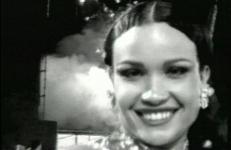
Come Closer, 2008
A poetic meditation on distance, Come Closer is a short and peripatetic film, casting an affective web between the locations of Lisbon, San Francisco and Brazil. Focusing on Brazilian-Algerian filmmaker Karim Aïnouz, musician Derrick Green –– the filmmaker’s brother and lead singer of Brazilian band Sepultura –– and her own work produced in Lisbon since 1992, Come Closer can be thought as a meditation on friendship and saudade.
Comédie, 1994
"This video in two parts is a newcomer's portrait of Montréal, and focuses on two of my architectural obsessions: the Hydro Québec building and the Métro. I spent my first winter in Montréal in a cold, dark, first-floor apartment. I sat in the kitchen beside the electric heater, drinking coffee and watching the disk on the electric meter spin faster and faster, all the while wondering how I would manage to pay the bills. At night, I lay in bed and looked at the enormous illuminated 'Q' on the Hydro Québec building and wondered how much it cost to keep it lit every night.
Dad's Stick, 2012
Dad’s Stick features three objects that my father showed me shortly before he died. Two of these were so well-used that their original forms and functions were almost completely obscured. The third object seemed to be instantly recognizable, but it turned out to be something else entirely.
The Disappointment: Or, The Force of Credulity is a documentary about the search for four lost treasures buried on a single farm in Missouri. These treasures include a Spanish explorer's gold, silver from the Civil War, mysterious stone carvings, lost texts, and a wife's attempt to heal her husband and protect herself and her children. Part personal documentary and part historical essay, The Disappointment traces the patterns of cultural forgetting etched in the landscape of the Austin Farm.
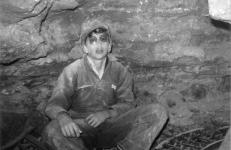
Driving Men, 2008
Sassy, iconoclastic, and never-married, Los Angeles filmmaker Susan Mogul rides shotgun with ex-lovers, almost lovers, and her Dad, in a road movie turned inside out. Conversations with each driving man - pornographer, tuba player, TV critic, long haul truck driver, and more - are catalysts to reflect upon the past and comment about the present.
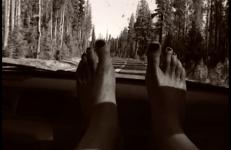
el güero, 2001
"A refreshing look at karaoke, psychedelic dance moves, and donuts all mashed together into a small and swinging film about a man who considers his private thoughts and private jokes worth sharing with a large audience. And it's unlikely that many would disagree."
--Impakt Festival, Utrecht, The Netherlands, 2001
This title is also available on Jim Finn Videoworks: Volume 1.
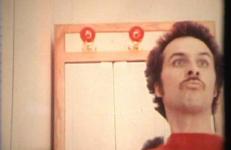
Filmed in Susan Mogul’s Los Angeles multi-ethnic working class neighborhood, Highland Park, Everyday Echo Street: A Summer Diary, is an insider’s view of how home and neighborhood are constructed in everyday relations. Composed of conversational and anecdotal portraits of neighbors and merchants, Susan ruminates about the past and the present, as she looks out her apartment window. Struggling to arrive at a new definition of “home,” she ponders loss, middle age, and living alone.
Excess, 2009
A rumination via handwritten index cards and an assortment of images recalling histories and ambitions of varied film productions.
Feathers: An Introduction is a self-portrait centered on the story of Latham's grandmother’s comforter which, old and worn, scatters feathers everywhere. Displaying an arresting stage presence, Latham addresses the viewer as a potential friend or lover, speaking in a soft-spoken near-whisper, and gingerly touching and kissing the camera lens and monitor. Then, almost mocking the video’s intimacy, Latham gives us close-ups of herself chewing a sandwich and shaving her armpits, heightening the sense that she has been playing cat and mouse with the viewer all along.
Five True Stories, 1980
Segalove relates a tale from her childhood of a man's exposure with text (“the painter wagged it at me right here”), while an arrow blinks over a shot of the house where she grew up. Segalove narrates: “I looked down and expected to see a can of green paint. I saw a pink penis instead, peeking out of the fly of his pants... I wondered how it had got so pink; had he painted it too?” This and four other memorable stories are humorously presented in a series of video one-liners.

Forbidden to Wander, 2004
Forbidden to Wander chronicles the experiences of a 25-year-old Arab American woman traveling on her own in the occupied territories of the West Bank and Gaza Strip during the summer of 2002. The film is a reflection on the complexity of Palestinian existence and the torturously disturbing “ordinariness” of living under constant curfew. The film’s title reflects this, as the Arabic words used to describe the imposed curfew “mane’ tajawwul” literally translate as “forbidden to wander”.
Habit, 2001
Habit is an autobiographical documentary that follows the current history of the AIDS epidemic along dual trajectories: the efforts of South Africa’s leading AIDS activist group, the Treatment Action Campaign, struggling to gain access to AIDS drugs and the daily routine of the videomaker, a veteran AIDS activist in the U.S. who has been living with AIDS for more than ten years.