


Sexuality

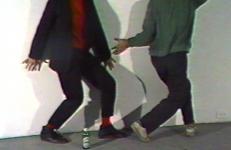
Distracted Blueberry follows a performance art band through a series of poetic encounters. Masculine tropes are undone to form a relationship between male sexuality and the human death drive. The body, violence and humour are positioned in the larger context of nothingness and somethingness, bridging a tension between externalized anxieties and the terrors of nature. Evocative of inner emotional states, strange landscapes exist as reflections of our shared dreams and nightmares.

Viewer discretion advised 
Blumenthal constructs a loose narrative around the sexual evolution of a woman (played by Yvonne Rainer) through a stunning collage of images appropriated from TV and film. Certain images come to dominate this effusive stream—tall buildings, sex scenes, an Elvis movie, the courtroom, fireworks. Doublecross pits the indeterminate, disruptive power of the erotic against the rigid, normalizing structures of family, law, marriage, popular culture, movies, and music—societal institutions that codify sexual relations.

In this interview Cecilia Dougherty describes her work and her explorations into family interactions, outsider psychology, role-playing, lesbian sexuality, and popular culture. Her videos Grapefruit (1989) and Coal Miner’s Granddaughter (1991) work from within mass culture norms to create a lesbian dialogue within the “normal”—what Dougherty calls “the life of the ordinary lesbian and her working-class family.” Her more recent vides explore lesbian identity within a separate social sphere.

Draft 9, 2003

"This movie was collected for four years before being sprayed scattershot over 28 minutes of psychic mayhem. The line between living and dead is a frontier crossed and re-crossed here. The living are dead while the dead are animated, breathing, swimming, giving birth. Consumed by the animal life of the city, the artist undertakes a first person journey, producing diary notes from one of the most skilled lens masters of the new generation. The camera is her company in this duet of death, the instrument that permits her to see the impossible, the unbearable, the invisible."

Sassy, iconoclastic, and never-married, Los Angeles filmmaker Susan Mogul rides shotgun with ex-lovers, almost lovers, and her Dad, in a road movie turned inside out. Conversations with each driving man - pornographer, tuba player, TV critic, long haul truck driver, and more - are catalysts to reflect upon the past and comment about the present.

Ecstasy Unlimited is an engaging video essay on the social construction of sexuality. Kipnis attempts to historicize pleasure and politicize desire, to reveal within the current discourse on sex — and within an ensemble of current sexual practices — the production of forms of sexuality that work to guarantee social order, rather than subvert it. Through various narrative ploys and theoretical tactics, the tape attempts to recover traces of a "political unconscious" in contemporary social malaise.

​From below ground, a man named Eddie describes flood lines, levees and trivial histories of the crumbling infrastructure of Memphis, TN. In this same city, the filmmaker, a recent transsexual transplant, watches military propaganda and contemplates masculine connectivity as he attempts to integrate into the American South. He posts a Craigslist ad asking men to masturbate on-camera with their firearms. He receives a single response from a man whose name is also Eddie.

Encounters I May Or May Not Have Had With Peter Berlin deals primarily with monumentality, narcissism and the ways in which our heroes are embedded into our identities, and manifested through the body. Through a variety of gestures, the pervasiveness of this practice is highlighted alongside its ultimate, inevitable failure. The viewer moves through various stages of anxiety, idolization and actual touchdown with 1970s gay sex icon Peter Berlin himself, capturing both the apparent and the hidden.

Phalloi Phaerie emerges from the wood. Forest nymphs with carnivorous flowers begin their mating rituals in a playful, polymorphously perverse return to arcadia. A meeting of Jack Smith and Sid and Marty Krofft in an early Kate Bush music video on a sylvan summer day in southwestern Pennsylvania.

Phalloi Phaerie emerges from the wood. Forest nymphs with carnivorous flowers begin their mating rituals in a playful, polymorphously perverse return to arcadia. A meeting of Jack Smith and Sid and Marty Krofft in an early Kate Bush music video on a sylvan summer day in southwestern Pennsylvania.

An homage to the death of the soap opera, The Evil Eyes is a 1960's era story of a grandmother faced with her mortality, a mother in mid-life crisis, and a son realizing his sexuality - a dysfunctional family whose unspoken angst manifests in the latest episode of their beloved supernatural soap opera, Before Dawn.

EVOL, 1985

In EVOL (love spelled backwards), the audience is voyeur, peering into the delirious and erotic dreams of a young man (Oursler). We drift with him through anecdotes that poke fun at the disparity between the culturally accepted stereotypes of sex and love we are taught as children and the realities we discover in adult life.

Face-Off, 1972

Acconci listens to his own recorded monologue of sexually intimate secrets and repeatedly tries to obscure these secrets by shouting over the tape, demonstrating the paradoxical situation of the artist confounded by two desires: to reveal oneself for the sake of pleasing the audience, and the conflicting desire to protect one’s own ego. As viewers, we are intrigued and tantalized by the confession we never hear.

The Fancy, 2000

The Fancy is a speculative, experimental work that explores the life of Francesca Woodman (1958-1981), evoked by the published catalogues of and about her photographs. Structural in form, the video radically reorganizes information from the catalogues in order to pose questions about biographical form, history and fantasy, female subjectivity, and issues of authorship and intellectual property.

Frances, a young Gay Indian (2 Spirit), played by Lacey Hill, is struggling with the aftermath of a gay basing. Through her friendship with her ex Jean, she gathers the strength to go out in public again. This video is a salute to the 70s and to Gay Indian movements which became 2Spirit/Indigiqueer communities.

Song performed by Lacy Hill.

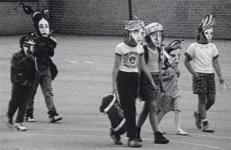
Flat is Beautiful is an experimental live-action cartoon using masks, animation, subtitles, drawings, and dramatic scenes to investigate the psychic life of an androgynous eleven-year-old girl. Growing up in a working class neighborhood with her single mother and gay roommate, Taylor confronts the loneliness of living between masculine and feminine in a culture obsessed with defining gender difference. Shifting between black and white film and grainy pixelvision video, Flat is Beautiful explores the internal and external worlds of sad people.

Shot in the style of a silent film from the 1920s, Frida & Anita is a political fantasy, intersecting the lives of two queer radicals — Frida Kahlo and Anita Berber — who happen to meet one fateful Berlin night in 1924 at the infamous La Garcon Cabaret.

In From Fagtasia to Frisco, Brenda and Glennda report from Fagtasia, an event honoring the Summer Solstice in New York organized by the Radical Faeries. Through interviews with Faeries and footage of their walk across the Brooklyn Bridge, the group proposes to reclaim the city as a safe space for queer people, and discuss reorienting queer consciousness toward spirituality.

Gay Tape: Butch and Femme is Cecilia Dougherty's first video work. She was immersed in two things at the time: making artwork, and being a part of the Oakland, California lesbian bar scene. The tape is the child of those two activities. Dougherty asked her friends, Ann and Joanne, and her girlfriend at the time, Rosa, to speak on camera about dating and the emergence of butch-femme relationships, which alluded to not so much a regression to old-time lesbian subculture, as to a quotation of those times, and an appreciation of that kind of lesbian eroticism.

Shot in black and white Super 8, this lyrical short follows a wandering, disengaged youth through grey afternoons. German Song features the hard-edged music of Come, an alternative band from Boston.

This very funny video plays with the identification of the camera as phallus, as an instrument of power and domination intruding upon reality; never an innocent bystander, it is always the organizing locus of events. Over sequences in which the camera/viewer approaches entrances to houses, shops, and other buildings, the soundtrack carries the moans of a man and woman reaching orgasm. The pitch and urgency of their moaning increases as the camera nears and finally penetrates its target.

Set to music by Bikini Kill (an all-girl band from Washington), Sadie Benning's Girl Power is a raucous vision of what it means to be a radical girl in the 1990s. Benning relates her personal rebellion against school, family, and female stereotypes as a story of personal freedom, telling how she used to model like Matt Dillon and skip school to have adventures alone. Informed by the underground “riot grrrl” movement, this tape transforms the image politics of female youth, rejecting traditional passivity and polite compliance in favor of radical independence and a self-determined sexual identity.

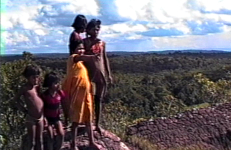
Chief Pedro Mãmãindê (who directed the proceedings and the shoot itself) describes the necessity of strengthening the girls of his village by secluding them after their first menses. After several months, the village throws a party, with singing, feasting, and the ritual abduction of the girl by an allied village. When the Nambiquara of Mato Grosso see videotape of themselves performing this ritual, the excess of Western clothing makes them uncomfortable. The ritual is then re-enacted with traditional body painting and adornment.

Chief Pedro Mãmãindê (who directed the proceedings and the shoot itself) describes the necessity of strengthening the girls of his village by secluding them after their first menses. After several months, the village throws a party, with singing, feasting, and the ritual abduction of the girl by an allied village. When the Nambiquara of Mato Grosso see videotape of themselves performing this ritual, the excess of Western clothing makes them uncomfortable. The ritual is then re-enacted with traditional body painting and adornment.

Grand Mal, 1981

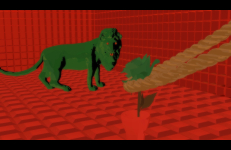
"Oursler’s thematic concerns betray classic Freudian anxieties about sex and death. In Grand Mal, the hero takes a convoluted odyssey through a landscape of disturbing experiences. The video’s free association includes, "digressions about the difference between salt and sugar and a version of the creation myth that is both banal and terrifying."

— Christine Tamblyn, “Art Notes,” Scan (November/December 1981)